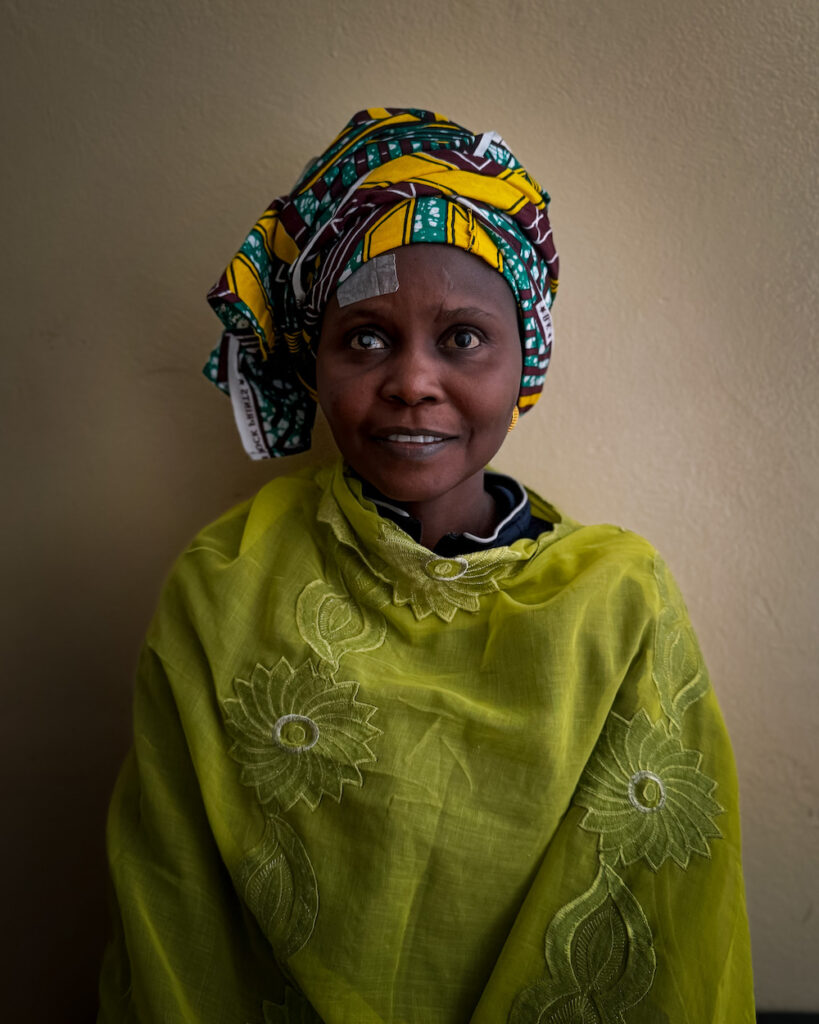
Dakar Expedition. January 2025
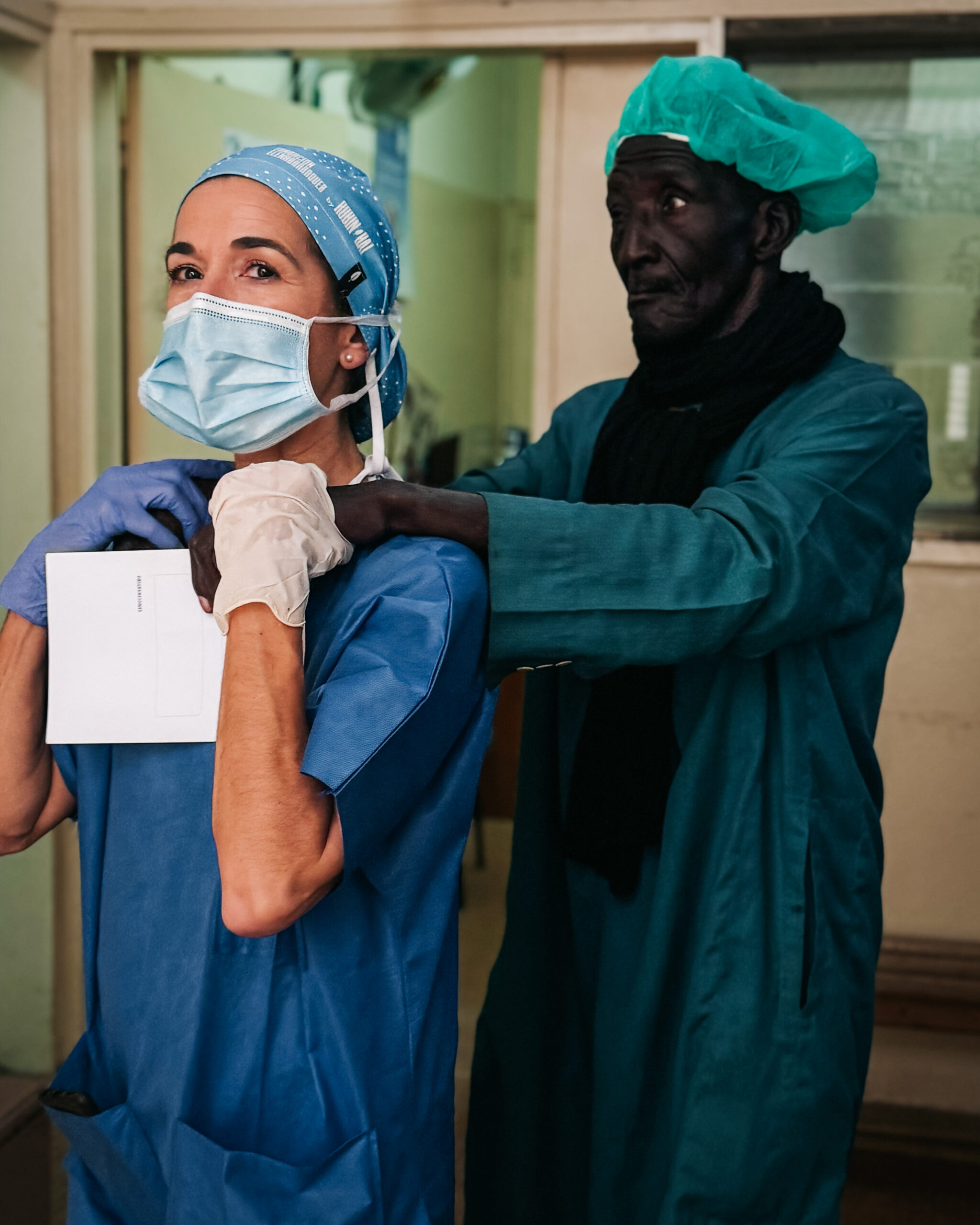
Having just arrived from Dakar, with hardly time to catch up on my sleep, I would like to thank the Elena Barraquer Foundation (FEB) for having allowed me to live an experience like this.
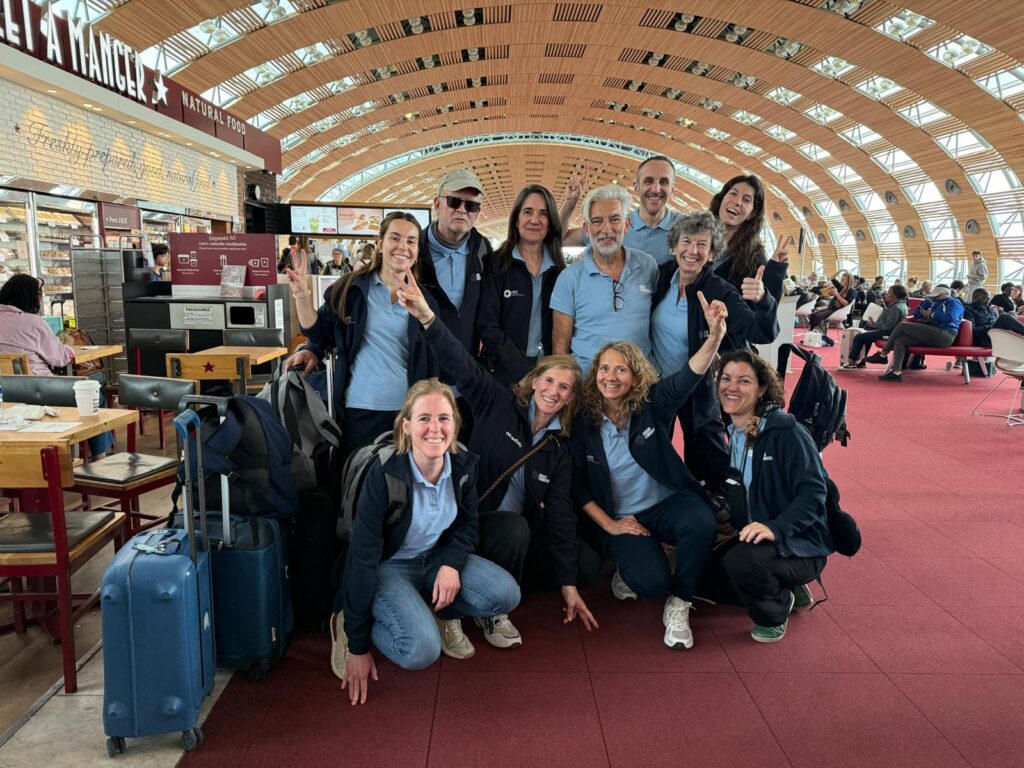
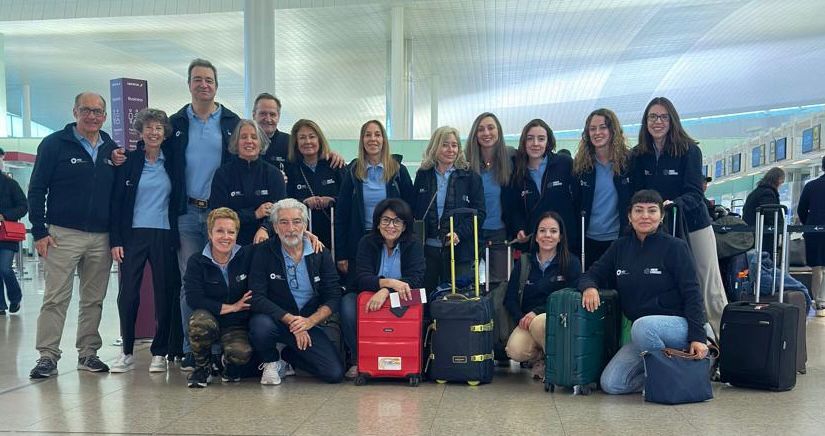
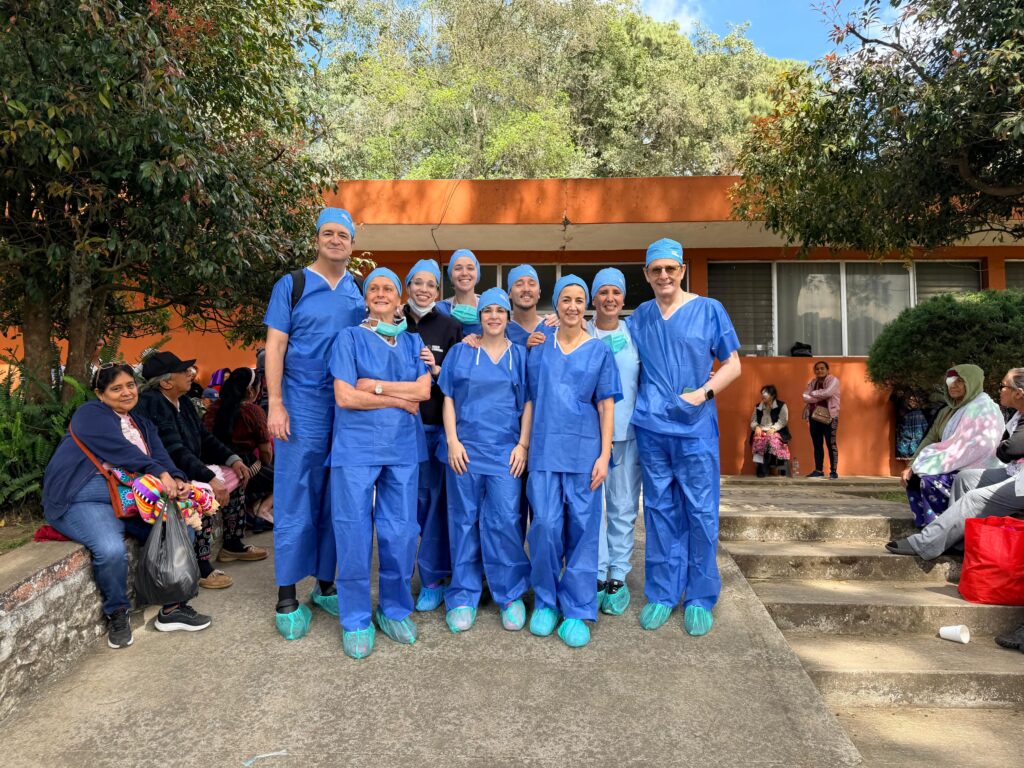
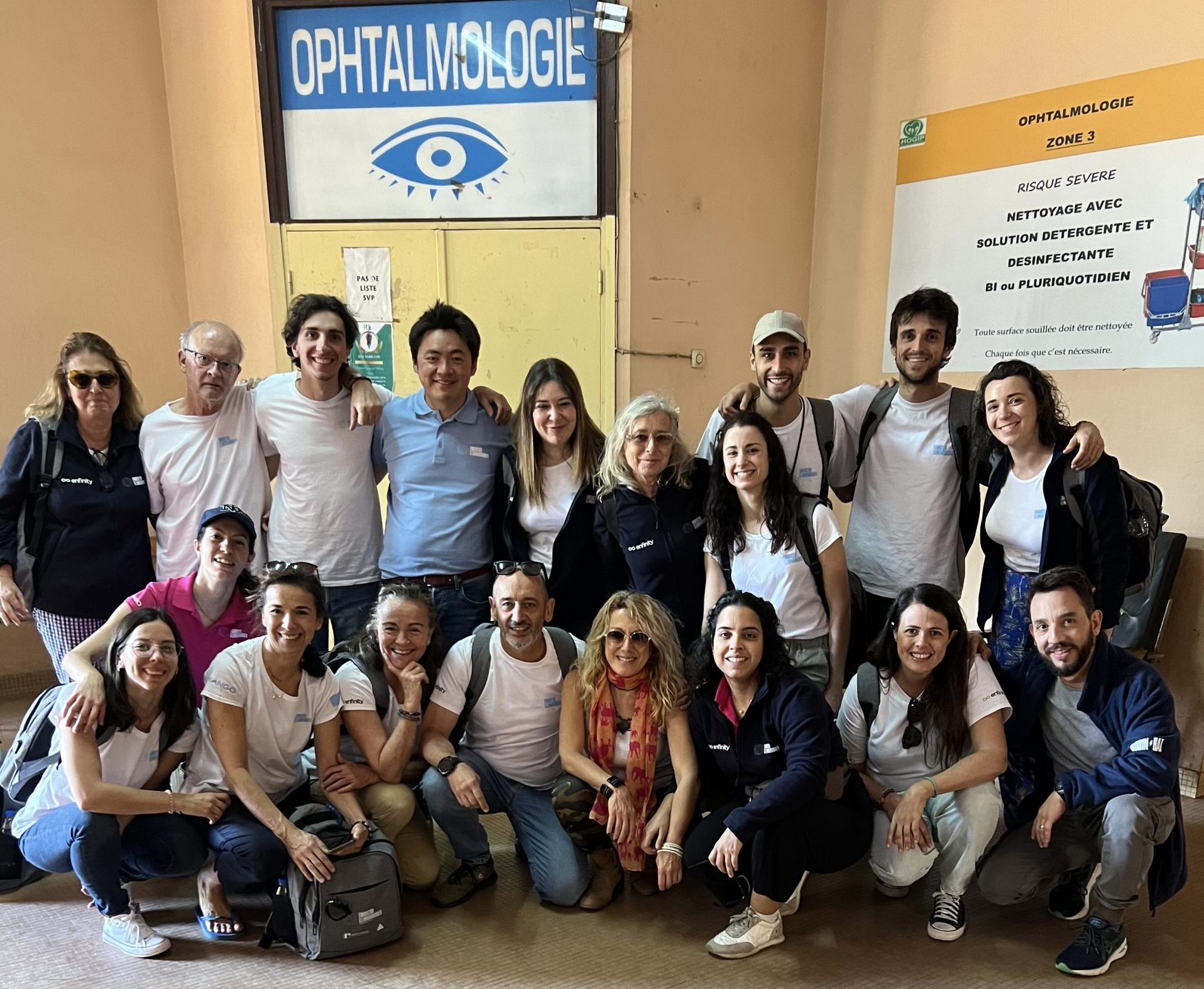
My surprise begins in Barcelona. A group of 20 people who do not know each other but who connect only with the first glance, the first greeting, surrounded by an endless trolley with huge black boxes and yellow, red and black sacks full of instruments, lenses, microscopes, anaesthesia, medication…, and all the surgical equipment, without being aware that they are loaded with hope and illusion, to give light to the lives of many people who lost their lives too long ago.
A comfortable light blue polo shirt and a grey rucksack identify us with a logo that simulates a cataract and that we will never forget.
Going to Senegal with the Elena Barraquer Foundation has nothing to do with the luxury of just another trip.
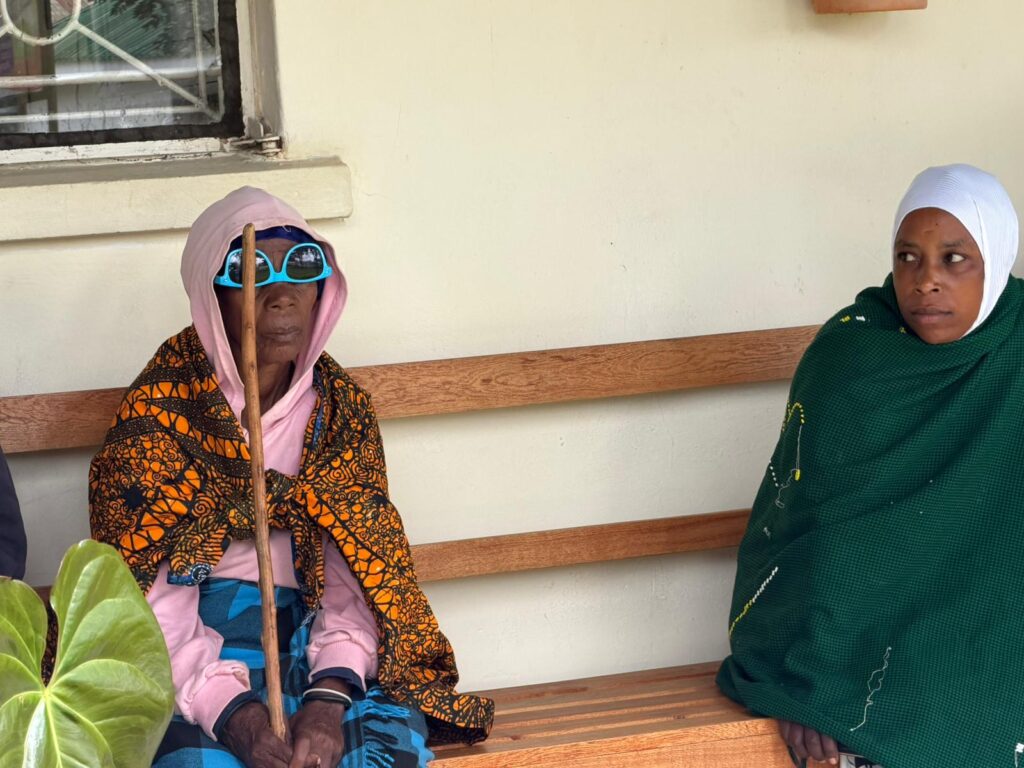
The luxury is to see the smile of a mother when she discovers that she can finally see her baby. Of a grandmother who, thanks to a single operated eye, can once again look after her grandchildren so that her children can work. Of a father who can once again bring a livelihood to his family or of a child who can regain the illusion of being able to play with his friends.
The luxury is to see a surgeon cry when he opens the eye patch of his patient, a boy of only 12 years old, and to see that there is light in his life again, and the whole team applauding with emotion. It is also to receive the constant affection and gratitude of all those patients, 633 this time, for having achieved something akin to magic. All of them have also given us their light and their magic to this expedition.
But what lies behind it is not magic. Behind it there is an organisation, a professionalism and a tireless work that manages to turn the African chaos into a perfect gear that does not waste a second, because all those seconds added up in 6 days can mean one more person operated on for cataracts.
We all add up, from Elena Barraquer herself, operating without rest to the last volunteer who, like me, hardly know anything about medicine.
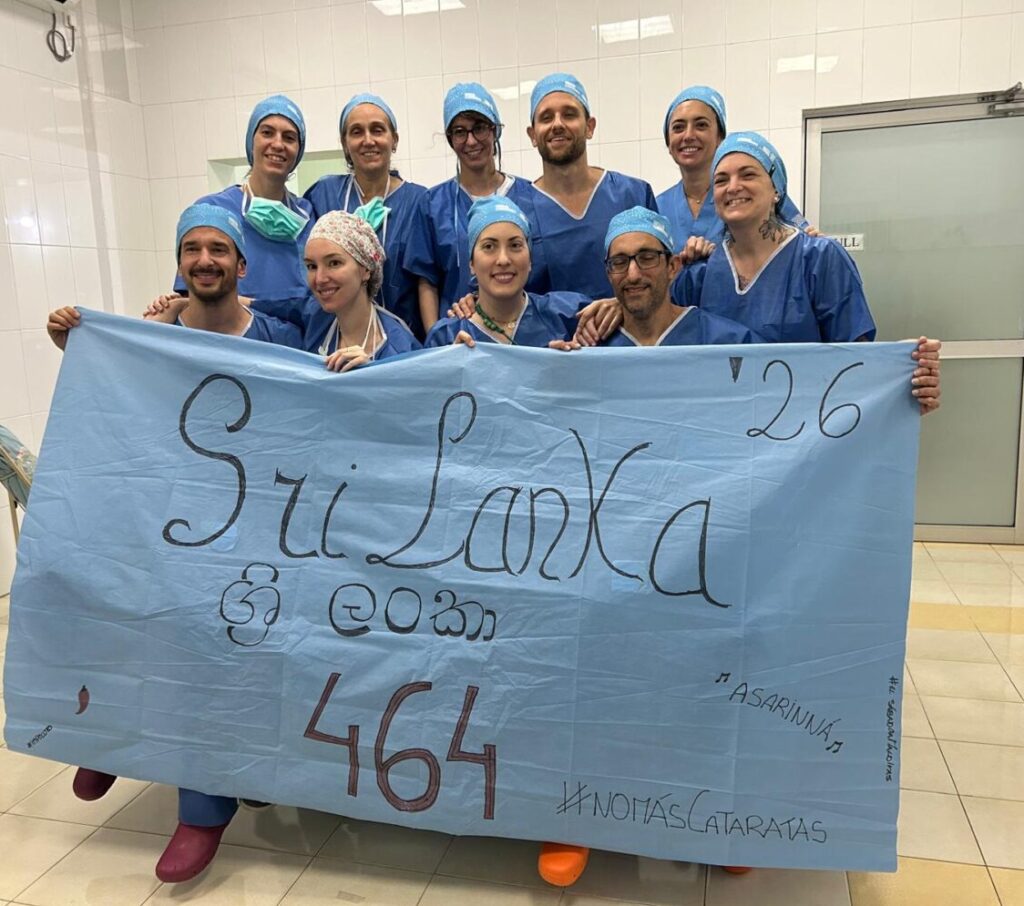
Among us there are surgeons, anaesthetists, ophthalmologists, operating theatre instruments and field volunteers, but above all we are men and women who came from different parts of the world (Belgium, Argentina, Italy, Colombia, Venezuela, Portugal and Spain), thinking of helping and we return with our hearts full of gratitude, in recognition of the courage and fortitude of those who have the least, our patients this year and those who are already waiting for us to return.
For all this, thank you:
Elena, Gustavo, Vincent and Borja (surgeons)
Simona and Andrés (anaesthesiologists)
Ana and Alix (ophthalmologists)
Sofi, Pau, Bruno and Henar (Operating Room Instrumentalists)
Mónica, Luis, Cristina, Ricard, Montse and Marta (field assistants)
And Mónica for always being by everyone’s side.
On behalf of all of them I write this note, because together we have been one.
Thanks to the Elena Barraquer Foundation for the great work it does all over the world and for allowing people who do not belong to the health field to receive this wonderful gift.
I will be back.
Pilar Vila-San-Juan – Field Volunteer
It’s 17:30. You fly at 20:00. You’ve arranged to meet at 18:15. You haven’t packed yet. You’re late. You run a bit. You realise that there’s not much to pack either. You’re going to spend the whole day in disposable pyjamas and you don’t have those. Passport. Mobile phone. Wallet. Keys. Passport. Passport.
Henar comes to pick you up. You notice that her suitcase is also freshly packed. You know it’s been ready for a long time. That’s the important thing. You know you’re going to be grateful to have someone prepared next to you.
Security check is OK. Flight OK. Taxi ok. Hotel ok. Sleep ok. Taxi ok. Again at the airport.
First introductions. More people with doubts. More people wanting to come. More people coming to give. To give to the one next to them, to give to themselves, to give to you. To, between all of us, give everything to those who are already there.
Bruno and Alix. Cristina. Marta, Pilar and Montse. Ricard. Moni, Sofi, Simona. Pau, Andrés, Ana, Gustavo. Vincent. Elena arrives. She knows your name, she knows all the names. She wants to know how each of us is going to help. She talks, she asks, she tells. Everything is easy.
Nice people help us with the suitcases. 12 hard + 24 soft +1 (le petit valise).
You are in Madrid. Monica 2 and Luis. We are all here. You’re terrible at learning people’s names. This time it hasn’t even been an hour and you already know them all. Even Paula’s.
You’re in Dakar. Everything is a little chaos. Everything is half done. Cars half done. Half-finished roads. Half-finished houses. Half-finished traffic rules. In reality there are also things that are half done and half undone. You stop and think about which of the two options would suit you best. You are either to be done or to be undone. It’s clear that you’re not quite done. You look out the window and see a half-done or half-undone car lying there. Three of you push it to get it started. It starts. You look inside the bus and see people wanting to push you.
Day 2. Day of adjusting expectations. Day of getting to know the reality. The reality of the hospital, of the space, of the people, of the patients. Reality is always harder. Expectations always have to be adjusted downwards. You have to reimagine spaces and invent circuits. Elena knows what she wants, Sofi knows what she needs. Pilar doesn’t say it, but she has been studying the hospital’s plans for a month and already knows where to place everything so that everything fits, everything flows, the light is just right and the colours transmit both calm and energy to continue operating.
What Pilar didn’t count on is that the doors don’t have handles. And that’s if they are open. It doesn’t matter. That’s it. We have set up 4 operating theatres where only 2 could fit. There are no patients so we can’t operate. We took the opportunity to go to an island. We found some maracas. Who wants a mvl if you have kes kes.
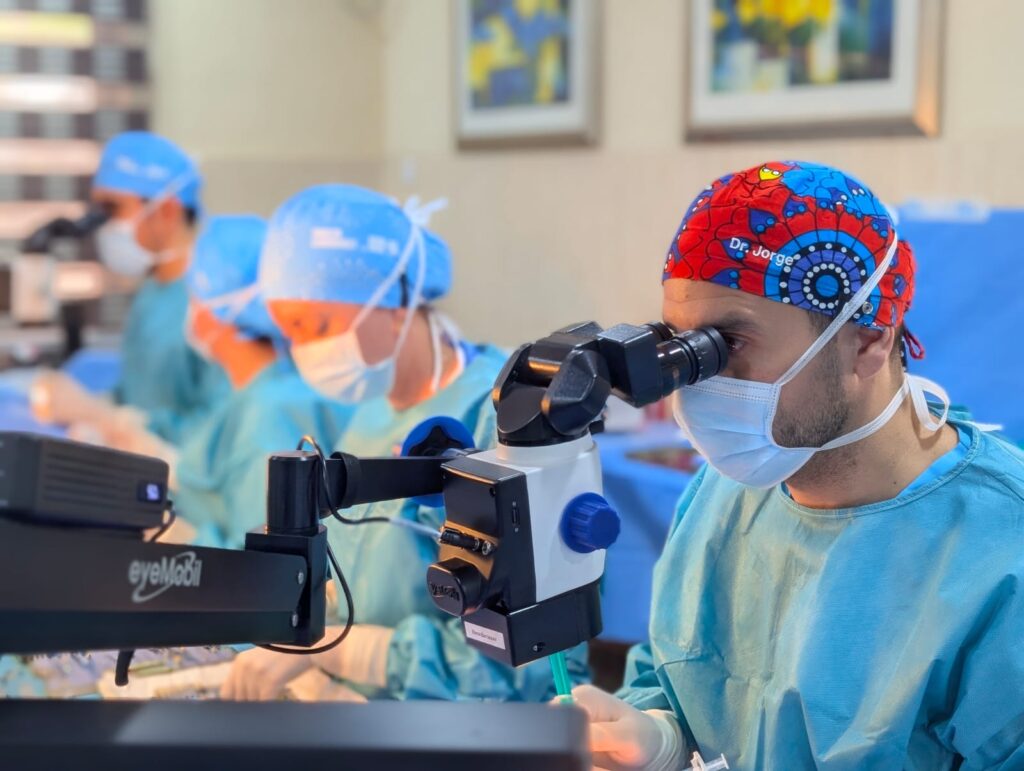
Day 3. Your turn comes. Please don’t let it be half done. Please don’t let it be half done. Please don’t let it be half done. First patient. First suffering. Gotta get the pulse of the mike. Gotta get the pulse on the phaco. Gotta get the pulse of the pedal. You have to get the hang of the lens. But Henar is there and everything is easier and more peaceful. Cristina, Monica and Luis are there and everything is easier because before they came they had 4 hands, 3 ears and 5 eyes implanted. Now they have developed a sense of anticipation and a speed of finding, taking and giving things that makes them never lack anything.
Sofi and Elena are not there, but Michelin came to pick them up in the evening to install a camera and microphones in my operating theatre. Now they see and hear everything. With one eye they look at their patient while with the other they keep an eye on the screen to help me with mine. You feel everyone pushing you. You hope that the others are also feeling how you are trying to push them.
There are more people who are not there but you know they are. You know because thanks to marta and ricard, there is never a patient missing on the stretcher. Because thanks to Simona and Andrés, no patient complains of pain. Because thanks to alix and ana you know what to expect before starting each surgery. You know this because you see from the corner of your eye patients coming in non-stop in the operating theatre next door, where Gustavo and Pau have become cataract and light implanting machines, and Montse and Pilar have become experts in taking away their fear and putting a smile on their faces. Ça y est. Tout c’est bien passe.
Alado Vincent switches from French to English and then to Spanish to talk to everyone and tell us how comfortable he is. He also tells us how bad he has a hard time at times. We all have a hard time at times. That’s why it’s important to keep pushing.
And beyond Elena continues to sing. She continues to operate. She is still attentive to everything and everyone. While Bruno only has eyes, ears and hands for her. He empties himself for Elena. Figuratively and literally.
Days go by. The mic is adjusted. The phaco is adjusted. The pedal is adjusted. The lens is adjusted. Henar is even more attuned. But the patients are still not all cured. That’s what we’ve come for. We have to go on. You want to go on. You want the stretcher to be empty for as short a time as possible. You hear the noise coming from outside and you know there are still a lot of them. You don’t want to waste time. But at the same time you look at the card with respect. Not a red dot, not another red dot. Red dot. 30G. Blue. Red dot. Visco. Snellen loop. Anterior chamber lens. Red dot. Vitrectomy. Three-piece lens. Red dot. You have a bad time. Surgery goes well. Red dot. You have a bad time. The surgery gets complicated. But it ends well. Today. And tomorrow. You hope in a month too. But you don’t know. Red dot. White cataract. IOL in the bag. This patient will be happy tomorrow, you tell Henar. She already has everything ready for the next one. And you go on. You don’t want to stop. But you are grateful that they come to stop you. Tomorrow you have to go on. Today it’s time to rest.
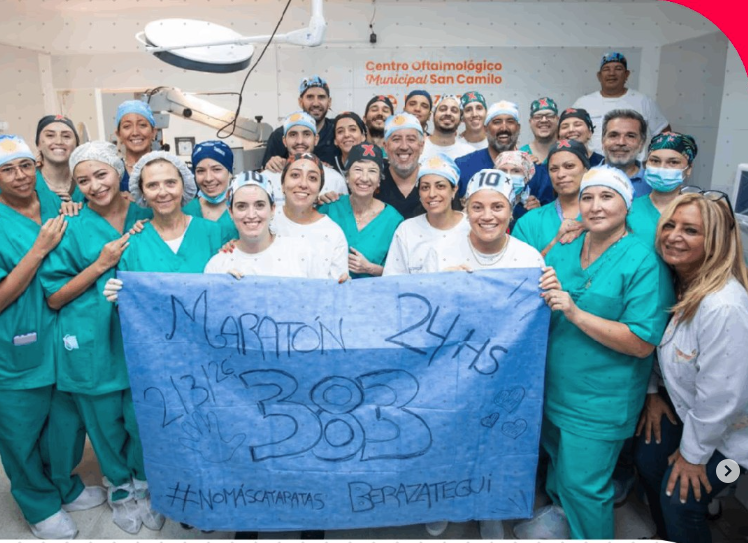
The days keep passing. You are getting more and more tired. You feel more and more at ease. You laugh more and more. You operate more and more. More than 300. More than 400. More than 500. More than 600. Last patient. 633. A round of applause. Hugs. Tears. Photos. Videos. Memories. Laughter. Lots of laughter. And many smiles. Thank you.
You’re still not sure if you’re half done or half undone. By now it’s clear to you that you’ve started. With a lot of pushing. Thanks to the pushing. But you started. And you’ve reached the end. At least for this time. Ça y est. C’est tout bien passé.
Borja Errazquin – Surgeon